Simiens Part I: A mother, a father, and an angel

The roof of Africa
IMG_5550

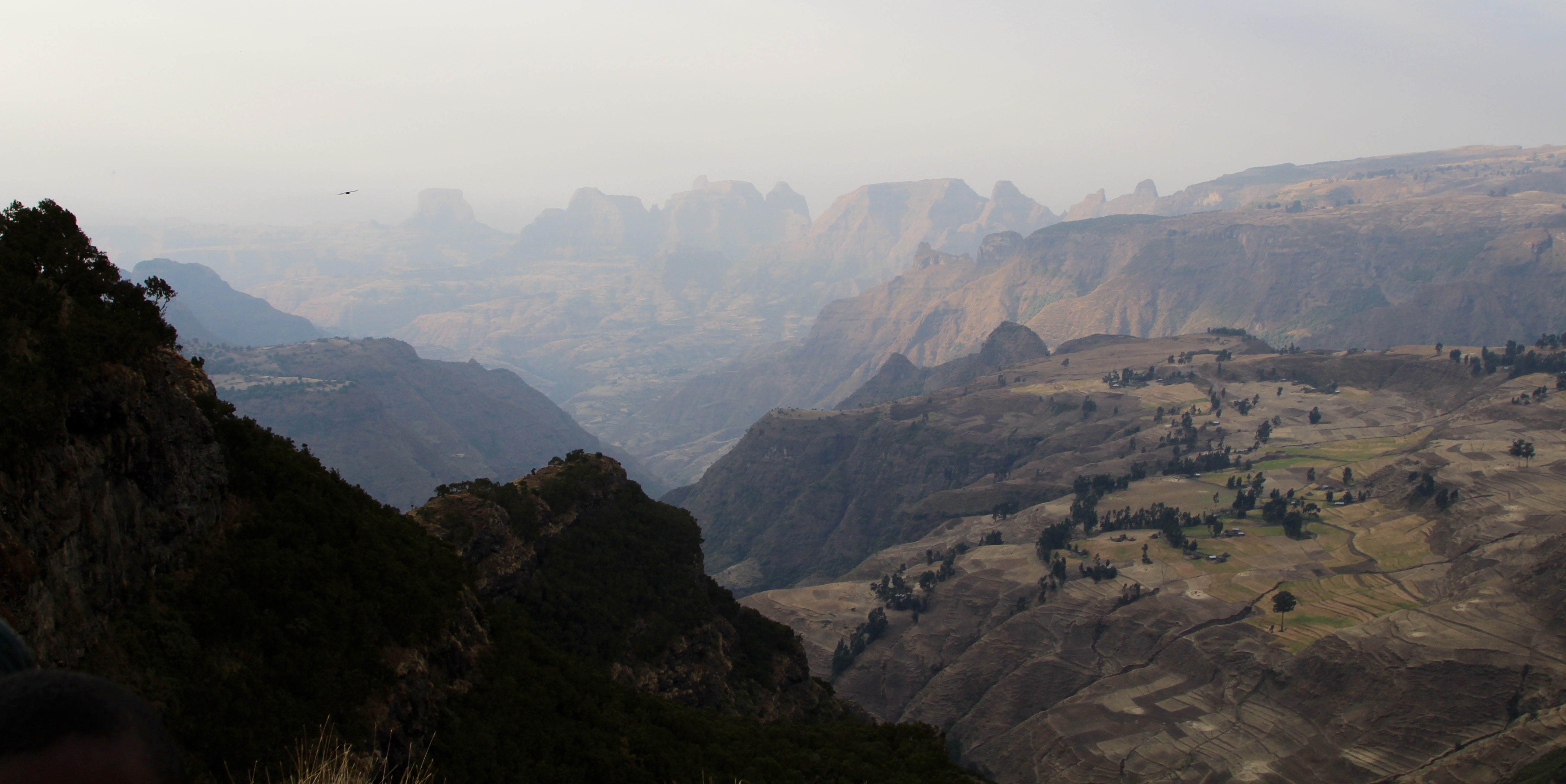
The Simien Mountains stretch over some 85 square miles, boasting a unique landscape that rivals the Grand Canyon as well as a truly charming string of communities connected by trails. The Simien Mountains National Park is appropriately a World Heritage Site, housing the world’s only population of gelada monkeys, Walia ibex and Ethiopian wolf. I’ll share more about some of the stops on our way in posts to follow.

Our plan was to travel from Gondar up to Debark, where our trekking guide Melaku is from, to have lunch and bunna (coffe) at his house, grab supplies and pick up our permits and scout for the park. From there, we would drive to Chenek, which is usually the end camp of a several-day trek for most groups touring the park.
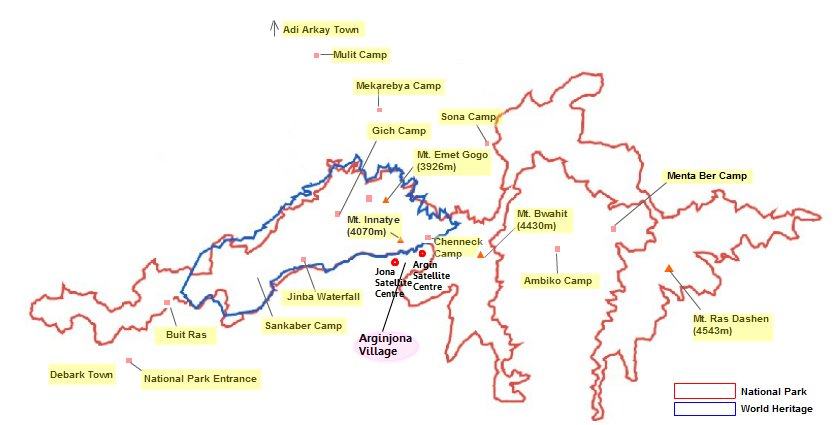
Image result for Simien mountains map

But we were starting at Chenek, trekking 20 km in the first day to reach the community of Sona. From there we would take another 14-km trek down the Buwahit pass across the river to Mekarebya, and then take another 16-km trek to Mulit for our final evening. From there, we would hike a few hours to Adirkay and drive back to Debark.

Departing from Gondar on January 20th, the region was still in the middle of Timket. Our minibus was stopped several times by groups of teenagers and young men dancing in the streets, requesting 10 birre for our passage. It made for an entertaining ride. We also passed the Falasha Jewish community on our way to Debark, which welcomes you with giant blue Stars of David.

Apparently, the Simien Mountains also used to be heavily populated by Jewish communities, known as Beta Israel.

Trekking Crew

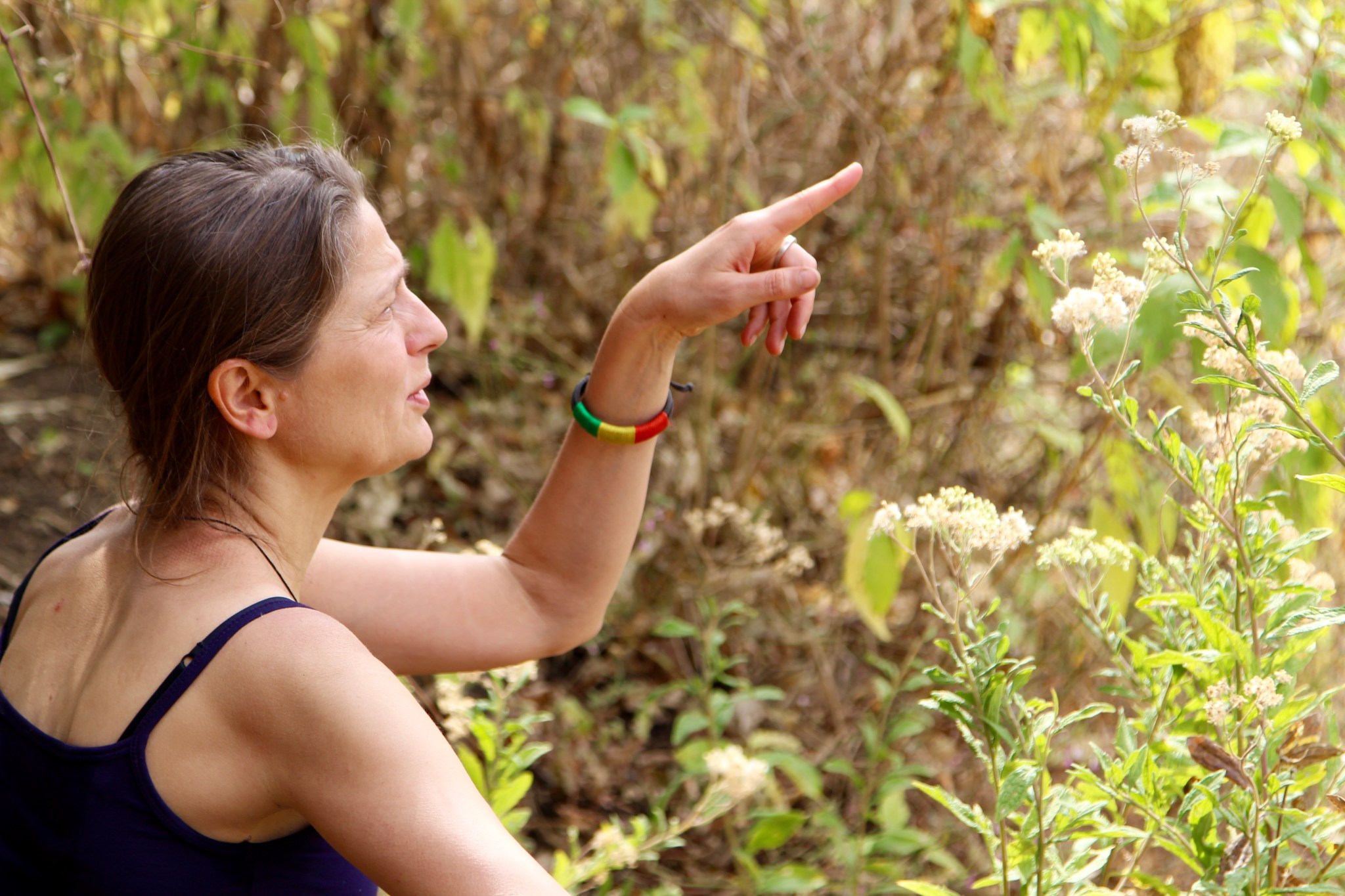
I’m deeply grateful for the cast of characters I spent a week with during my time in the Simiens. As for Inken and Manuela, the two German women I randomly found on the Lonely Planet ThornTree travel forum, I expect the universe wanted us to meet. The moment they pulled out their German tarot deck I knew they were my people, and according to them, I was a welcome reprieve from some truly horrific groups of Germans they had taken on a tour of the country a few months prior.  Win-win.

Here are several members of our trekking crew, and the translation of their names. (Deep apologies to Manuela, whom I did not take a proper portrait of).

IMG_5437
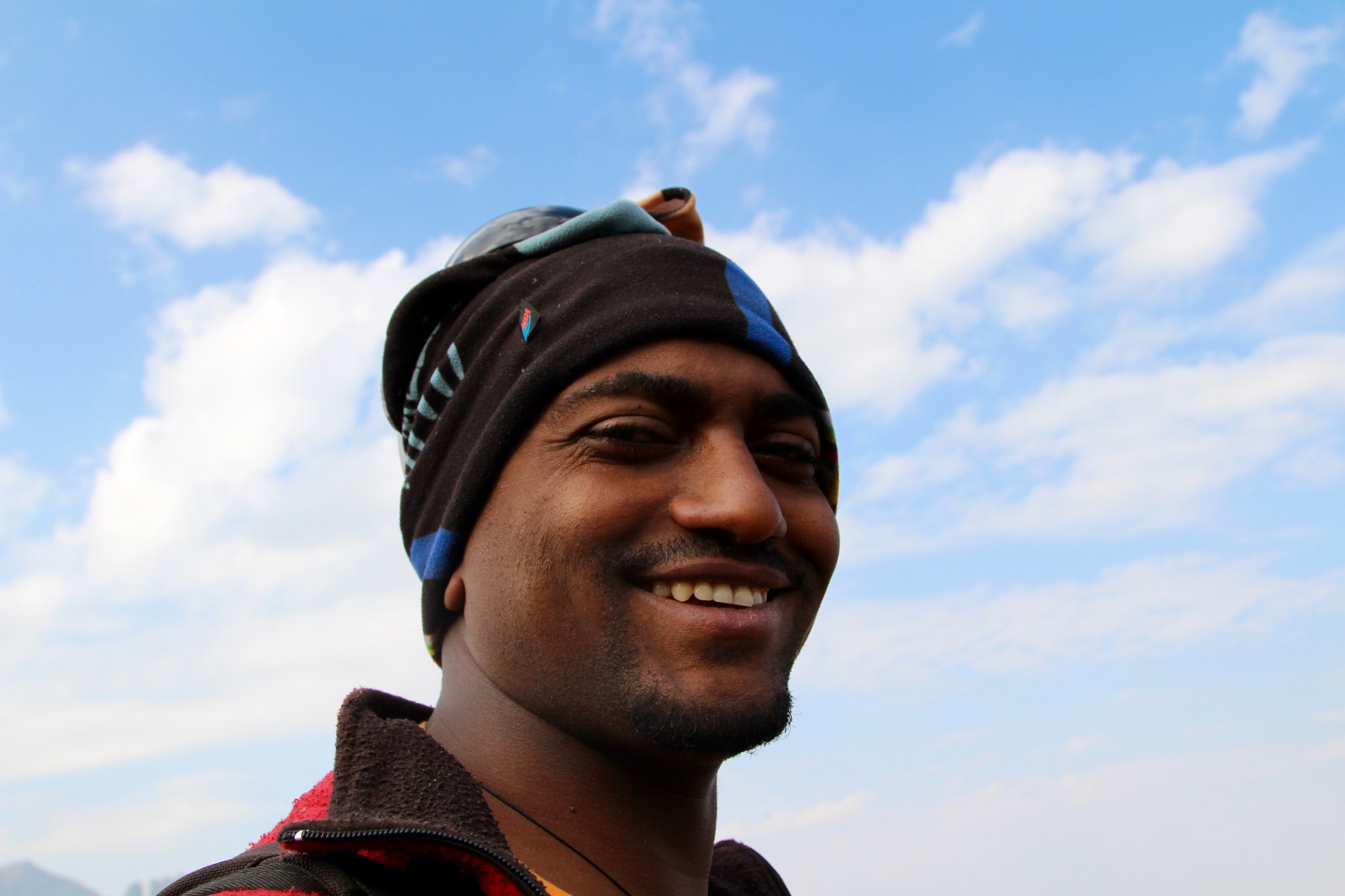
Melaku, “the angel” holding his son in Debark
IMG_5499
Melis, “the one who comes back”, our careful driver
IMG_5564
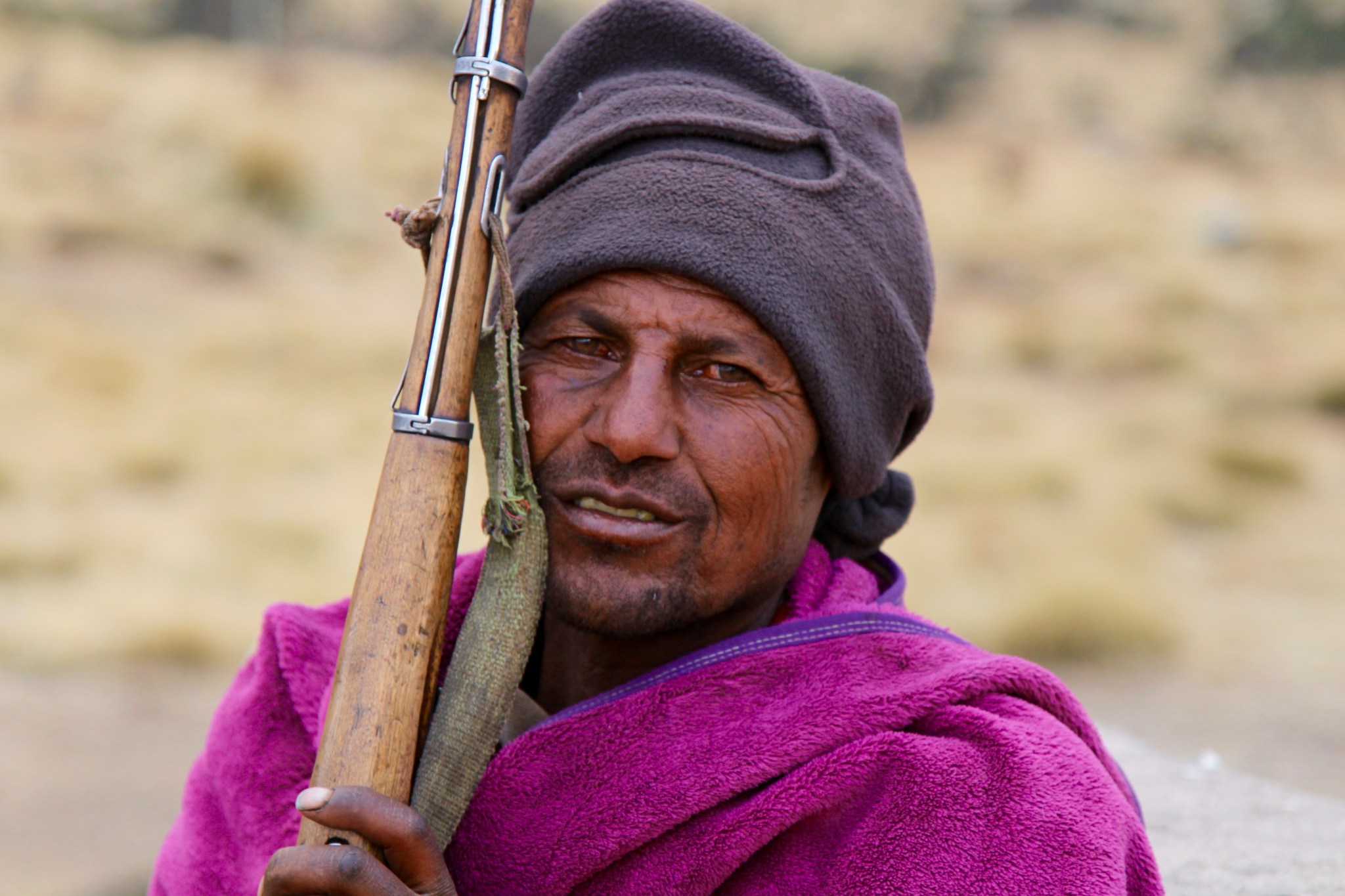
Abati, “our father,” the scout
IMG_5684
Member, the cook
IMG_5691
Inken, 19-visit veteran to Ethiopia
Chenek

Already at 3,600 meters (over 11,800 feet), the little town of Chenek sits about an hour hike from where Melis dropped us off due to the conditions of the road. It was a fairly easy hike there, but I was immediately surrounded by the children who call the camp home. They got to practice their English; I got to learn some Amharic. Mostly, though, they played with my sunglasses while I honored their request for “and photo!” – one photo! My Flickr page will have many more shots of these cuties, but here’s a few for now:

This was the only campsite where we were joined by several other trekking groups from all around the world. We got to meet many of the guides and scouts from the other groups. Boy do these men know how to take a good photo:

At most other sites, we were joined by a single German couple, one of whom had a constant bloody nose. I’ve never seen anything like it to be honest. But it made for some amusement on the trails since we could always tell if they had been there before us by the dots of blood splattered about. At Chenek, we ate dinner and rested up for our daunting 20-km push to Buwahit (4,430 meters) and Sona the next day.

Day 2: Buwahit (pronounced “bw-ay-eet”)

On our approach to Buwahit , I was really struggling. All of the angst and worry that had bubbled under the surface in the weeks preceding my trip pushed forward through several panic attacks the night prior. In my tent, underneath the most brilliant tapestry of night sky, I tried to distract myself. But it was as if the universe was forcing me to confront it — every piece of electronics I had on me suddenly didn’t work. Both phones. My iPod. I found some scrap paper and scribbled a few things down, but it didn’t work.

My entire body was shaking as my mind raced, un-anchored in doubt: What the hell was I doing in Ethiopia? Shouldn’t I be spending my sabbatical on a beach somewhere? Something terrible is going to happen, I just know it. Why did I come to the Simiens without Amin? I don’t know these people, this will be torture!

IMG_5623
Me, having my catharsis, while Inken and Manuela patiently wait. Photo by Melaku

I hadn’t had a night like that in a long, long time.

Needless to say, at the outset of the most challenging day of our hike, I was a wreck. I felt deeply alone. My body was full of stress hormones and my muscles weak. Every step felt impossible and I was incredibly frustrated.

After several meters of ascent, Inken, Manuela and Melaku had pushed far beyond me. Abati stuck behind, as was his job, but I just wanted to be alone. I could feel in my chest a welling of tears that, when combined with the altitude, made it hard to breathe. I crouched down and began to cry. Realizing what was happening, Abati extended the most warm and paternal gestures my way and tried to communicate something, but I didn’t know any Amharic and he didn’t speak any English.

Eventually I waddled my way up to meet the others. I confided in Inken, a psychologist, that I was struggling. Immediately, she understood and started to cry with me. The healing power of simply putting words to your feelings will never cease to amaze me.

When Melaku asked what was wrong, she said that I was worried, in a country I didn’t know, all by myself. “Remember when you came to visit in Germany, Melaku, how worried you were?”

And then she turned to me and said, pointing to the others, “But look: you have a mother, a father, and an angel. What more do you need?”

Melaku, the angel, was still sizing me up. He’d trekked these mountains so many times, with so many different faces. “Was this one going to make it?” I imagined him wondering with his dark eyes and curious gaze. In his low, melodic voice he looked at me and said, “No woman, no cry.”

I smiled. I cried a little more and could feel something was shifting. I got up, and at last felt like myself. My breath was easy, my muscles more engaged. That gentle lift in the spirit I was accustomed to feeling during a hard hike had returned. Inken was right. What more did I need?

It turned out that each of us had our own day of struggle on the trail, be it emotional, physical, or gastronomic :). But we held each other through it, checking in on each other and pacing ourselves as a group so that no one was left behind. That’s a good hike, I suppose. The mountain reveals all and forces you to metabolize what you’re going through, one step at a time. It’s incredibly meditative, but rarely without struggle.

Melaku, in jest, was sure to ask us when we’d be crying each day of our trek.

It suits you

The song for this post simply has to be Zero 7’s Likufanele, who’s Zulu chorus literally translates to “the name that they call you by suits you.”

We get up in the morning, feelin’ tired.
Sometimes we feel good, sometimes we feel bad,
But we gonna do it with feelin’.
From the root to the fruit, that’s where everything starts.
Timket

IMG_5268
Timket Girl Power

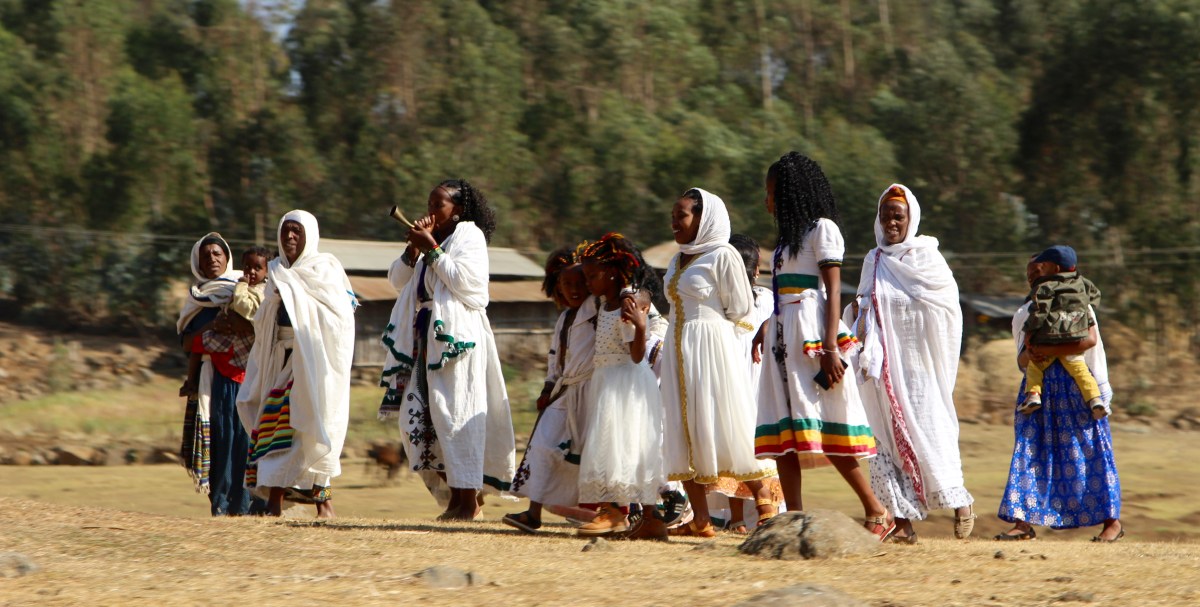
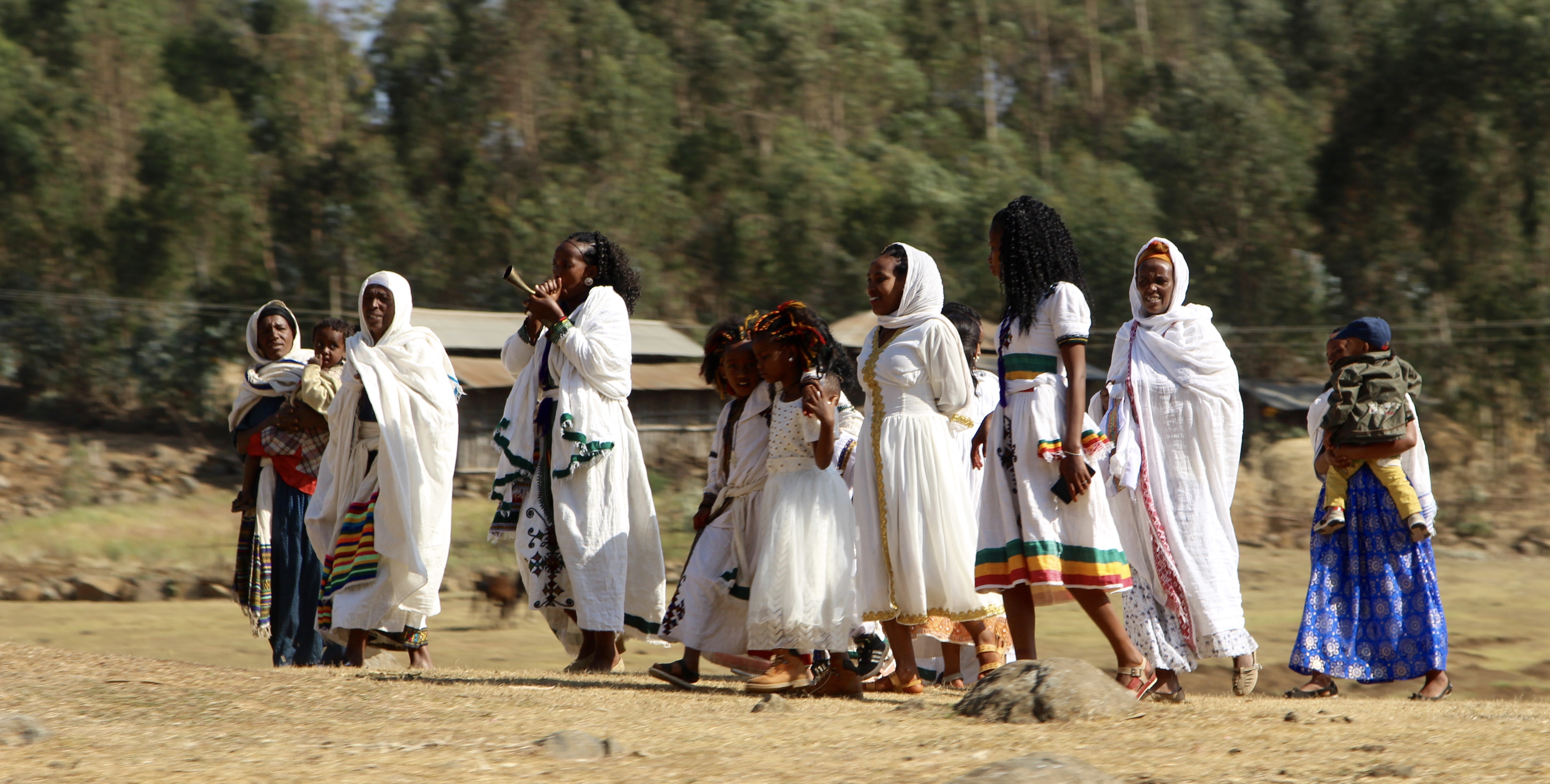
For those seeking a deeper cultural experience, the three-day Epiphany holiday of Timket does not disappoint. I did not intentionally plan my trip around it – it was more like a happy stumbling upon – but it no doubt shaped my impressions of Ethiopia and its people.

To get you in the spirit of this holiday, I offer the following musical gems. The first, of course, is Alison Krauss’ Down to the River to Pray:

And a bonus: Johnny Cash’s He Turned the Water Into Wine, performed at San Quentin:

About Timket

First, the basics: Timket, which literally means baptism, celebrates the baptism of Christ in the Jordan River. The peak day of the festival falls on January 19th each year (Tirr 11 on the Ethiopian calendar), and it just so happens that the hot spot for this celebration is Gondar, the very same jumping off point for my trek in the Simien Mountains set to start on January 20th.

You gotta love it when the stars align.

As Amin told me in Addis, watching the flurry of pilgrims packing the streets on the first day of Timket, Ethiopia is a very religious country. About 63% of the country identifies as Christian and 43% specifically as Orthodox Christian. In the Amhara region, home to Gondar and the entirety of the sites I would see in the north, well over 80% of people are Orthodox Christians.

Timket leaves you with a sense that you’re seeing Christianity in one of its oldest forms. There were moments when the rituals even felt downright Jewish. I could see why Ethiopia is such a popular travel destination for Israelis — not only is rumored to be home to the elusive Ark of the Covenant containing the original tablets Moses brought down from Mount Sinai, but it also boasts a Semetic language (Amharic), an historic Jewish community that recently emigrated to Israel, and a dry and historied earth that feels deeply Israeli. In a country where all three of the Abrahamic religions — Judaism, Christianity, and Islam — share legitimate and interesting heritages, Ethiopia illustrates how the roots of each are deeply intertwined, as well as their ability to coexist with one another when our better angels prevail.

The Magic of Gondar

I arrived in Gondar on the morning of January 19th, greeted by Melis Berihun, the brother of our trekking guide Melaku (more on them later). We immediately set off to meet the rest of the trekking group, and it did not take long for me to sense that Gondar’s Timket is an entirely different thing altogether from what I witnessed on the streets of Addis.

Let me paint you the picture: throngs of white-robed pilgrims meander the streets, darting in and out of tuk tuks (called bajaj), minibuses and other (exclusively Toyota) vehicles packed bumper to bumper. Goats, sheep and cattle scurry past the shepherds who nudge them onward, while clusters of young men with herding staffs kick up dust, dancing and chanting in circles with big smiles on their faces. Husbands and wives don matching patterns on their traditional gowns underneath umbrellas of every shade imaginable. And not infrequently, the colors of Ethiopia — red, yellow and green — adorn any and all of the above.

There is a happy and communal chaos to these streets. I will jump into the middle of this after a quick meal with my trekking companions, whom I’ll introduce in another post. Over lunch, they told me about their somewhat harrowing experience during the communal baptism that morning, and I later got to tour the bath where the major ceremony occurs.

The Camelot of Africa

The northern region of Ethiopia still reverberates with the traditions and infrastructure of the Solomonic Emperors of Ethiopia – once a ruling empire that the Amhara people identify as a point of pride. While Axum and Lalibela both served as capitols of the empire at various times, the crowning jewel is the city of Gondar with its many castles, the most famous of which is Fasil Ghebbi.

After roaming the streets, my trekking companion Inken showed me the many structures within the royal compound. I’m not really a castle person; they all start to look the same to me after a while. However, there was a dizzying amount of facilities on this spot, including libraries, saunas, churches, stables and lions cages built by different royals. So, bonus points for Gondar.

The style

I’d like to end my post with a shout out to the bold styles I saw on the streets during the celebration. The red stripes of Gondar, cowboy hats, studded suits, and more. Sigh…I love these people:


Roam, if you want to.

Fly the great big sky
See the great big sea
Kick through continents
Busting boundaries…

The B-52s, Roam

I’ve got to start the sabbatical blog series with a favorite song from my favorite Athens, GA band (I know…it’s not R.E.M), because in the midst of my pre-trip jitters (or, you know, panic attacks) this song came on my playlist and a giant smile spread across my face. “Ah yes, Alicia, this is what it’s all about….”

After a 23-hour journey that included a three-hour stint on the Newark Airport runway and a quick refuel in Lome, Togo, so begins my three-month sabbatical. Already, I’ve found people incredibly friendly. I sat next to a hilarious couple who live in Vegas now, but originally hail from Ethiopia. She is Eritrean and he is from the Southern region of Ethiopia — they were eager to give me different tips about things to see and help me take a few stabs at Amharic, the official language in Ethiopia.

At Newark airport, I met a woman named Sarah who works as a nurse in Framingham, MA, but is visiting her grandmother and sister in Addis. Over dinner, she told me about her teenage years fleeing the government during the Ethiopian Civil War and crossing into the Sudan free zone from Gondar — no small trek. After a harrowing time as a refugee, she was ultimately sponsored by her uncle in Dallas to live in America. She is warm, motherly (she gushed about her two children in college, insisted on buying me my dinner and wants to show me a few places in Addis) and hard-working.

Her story made me reflect on the state of discourse about refugees and immigrants in America right now. It’s not only heartbreaking and angering in light of the often-mean and over-simplified things that people will say about immigrants, but it also makes me eschew the idea of a so-called merit-based system. I have to wonder if Sarah, with her now-perfect and accent-free American diction, children moving through college and steady job as a caretaker for others, would have made the cut as a refugee if we ever adopt some of the ideas being thrown around by government officials these days. She was just 18 when she had to flee, so none of these qualities or circumstances about her life today could have been known. Anyways, I digress. But I’ll just say that the quality of Ethiopian restaurants in Boston alone should make us welcome the great gifts of refugees and immigrants.

Image may contain: screen

The hilarious and somewhat unsettling flight map on my Ethiopian Airlines flight to Lome, Togo.

Greeting my inner-worrier

I begin my journey on the sunny, dusty and quasi-chaotic streets of Addis Ababa, Ethiopia. Addis, for those keeping score, grabs the number 4 spot on the list of highest altitude capitols in the world. Clocking in at 2,355 meters (or 7726 feet) above sea level, Addis leaves you just a bit more winded and weaker than normal. Having been to La Paz, Bolivia, the reigning champion for oh-my-god-why elevation, I would say that this is a manageable adjustment, although it leaves me a little nervous for my 5-day trek in the Simien Mountains coming up at the end of the week.

Today is mostly about calibrating to the altitude, time change and the idea of being in Africa. My plan is to be in Ethiopia for three weeks, with a homebase at my dear friends Mukhtar Amin and Sarah Hurlburt’s house in Addis. Mukhtar is a fellow Jumbo, and we met while working at the Global Development and Environment Institute (GDAE) at Tufts. After spending many years in the Boston area, Amin and Sarah moved to Addis to raise their kids and experience life in Amin’s home country.

Being with them is a great comfort at the start of my journey. When faced with uncertainty, my tendency is to become a worry wart and concoct all sorts of disaster scenarios in my head. I wish this wasn’t so, but this is my process. Several months ago, the idea of bouncing around the globe with three months to myself and no requirement to define myself through working at Farm Aid or as a yoga teacher was absolutely exhilarating. But as the departure date crept closer and closer, my inner worrier became louder and louder. I’ll leave out the specific iterations of the movie that plays in my head, which can be truly ridiculous and horrific, but it usually falls along the lines of “Who am I if I’m not Farm Aid’s advocacy director?” and “What if something terrible happens while I’m abroad?”

Those in my closest circle of friends and loved ones have seen the Alicia-worry-demon up close and personal. It’s not pretty. But the truth is my inner-worrier is an old friend who’s just trying to keep me safe. She came by her fear and worry honestly, having seen and survived real trauma, and she often just feels the need to work overtime when I meet substantially uncharted waters. She’s a warrior in her own right.

Since this is my yoga website at its core, it feels appropriate to share this, just as I would with yoga students in class. Why? Because it’s honest and sometimes that can be useful to others. What if instead of ignoring or burying my anxiety in shame, I just gave it some space, attention and light? What if I name it to help put it in perspective and with a big breath, send it some love and see if it shifts or settles? In Comfortable with Uncertainty, Pema Chödrön offers the following, which I think is useful for this moment:

“Our habitual patterns are, of course, well established, seductive, and comforting. Just wishing for them to be ventilated isn’t enough. Mindfulness and awareness are key. Do we see the stories that we’re telling ourselves and question their validity? When we are distracted by a strong emotion, do we remember that it is part of our path? Can we feel the emotion and breathe it into our hearts for ourselves and everyone else? If we can remember to experiment like this even occasionally, we are training as a warrior. And when we can’t practice when distracted but know that we can’t, we are still training well. Never underestimate the power of compassionately recognizing what’s going on.”

So this is where I am at the start of my journey. Comforted by the presence of old friends and trying to learn from my inner worry-wart as I start a trek that will take me the farthest from home I’ve ever been.

RIP, Dolores

I’ll close this inaugural blog in honor of Dolores O’Riordan, may she rest in peace and power. It’s impossible to have a favorite song on The Cranberries’ No Need to Argue album, which has seen me through so many challenging and defining moments in my life. But Dreaming My Dreams feels like the right pick for tapping into the wanderlust. I’ve yet to find the type of love that she expresses for her husband here, but it’s definitely the kind I hope for.

Here’s to our collective dreaming, friends and loved ones.