
The roof of Africa
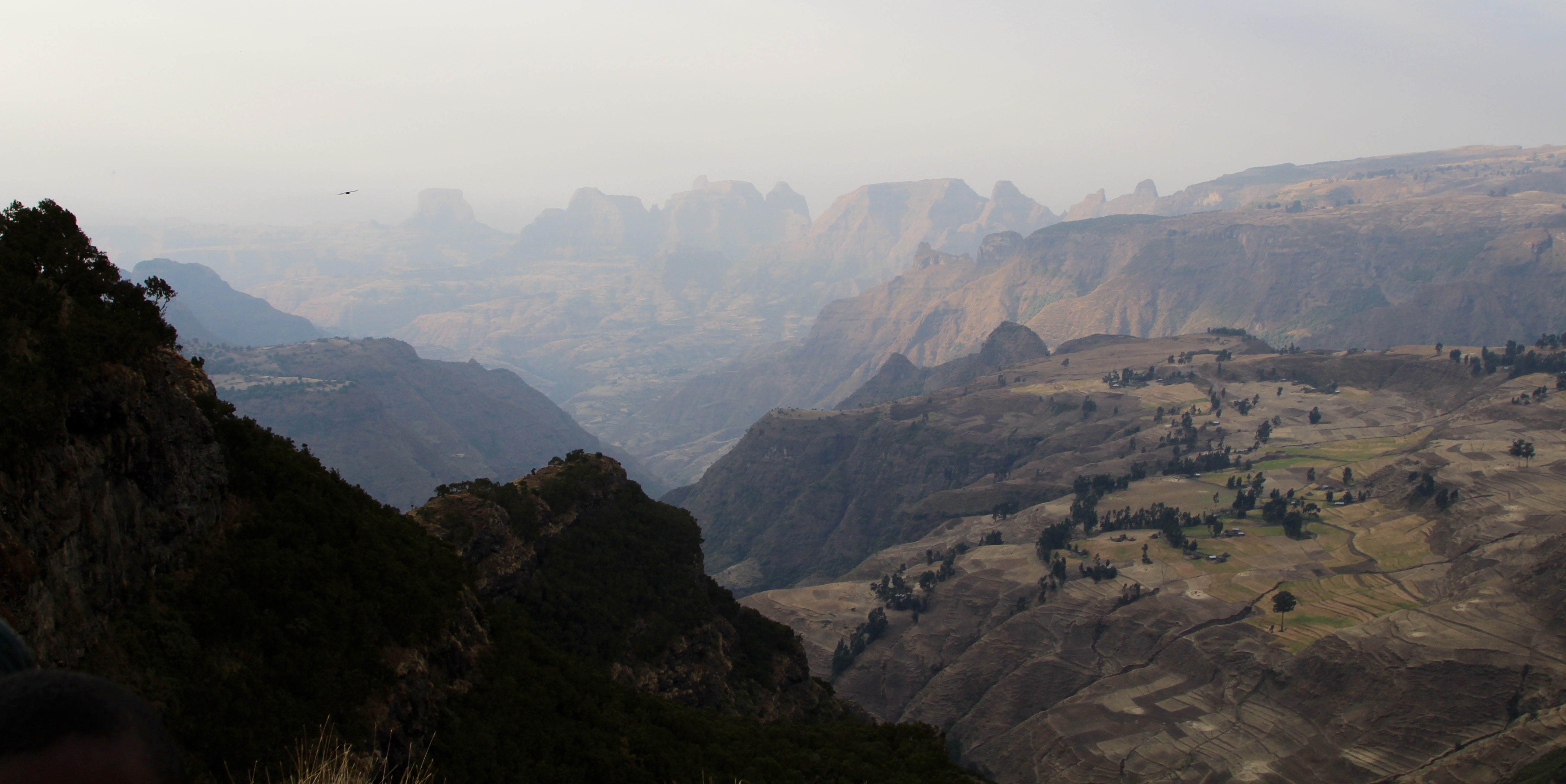
The Simien Mountains stretch over some 85 square miles, boasting a unique landscape that rivals the Grand Canyon as well as a truly charming string of communities connected by trails. The Simien Mountains National Park is appropriately a World Heritage Site, housing the world’s only population of gelada monkeys, Walia ibex and Ethiopian wolf. I’ll share more about some of the stops on our way in posts to follow.
Our plan was to travel from Gondar up to Debark, where our trekking guide Melaku is from, to have lunch and bunna (coffe) at his house, grab supplies and pick up our permits and scout for the park. From there, we would drive to Chenek, which is usually the end camp of a several-day trek for most groups touring the park.
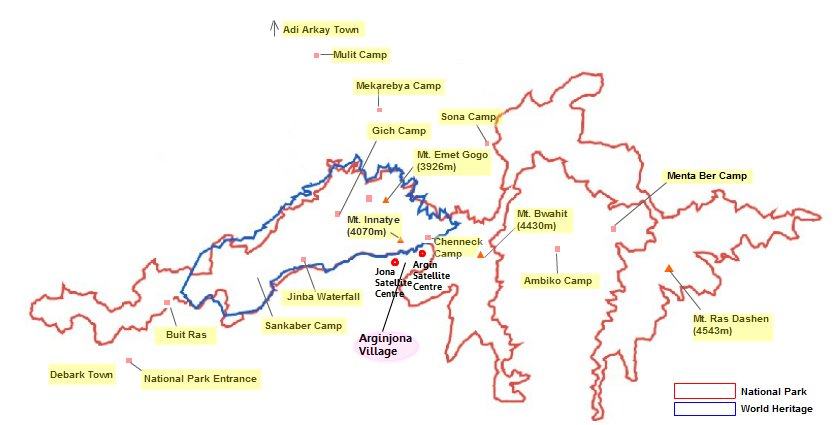
But we were starting at Chenek, trekking 20 km in the first day to reach the community of Sona. From there we would take another 14-km trek down the Buwahit pass across the river to Mekarebya, and then take another 16-km trek to Mulit for our final evening. From there, we would hike a few hours to Adirkay and drive back to Debark.
Departing from Gondar on January 20th, the region was still in the middle of Timket. Our minibus was stopped several times by groups of teenagers and young men dancing in the streets, requesting 10 birre for our passage. It made for an entertaining ride. We also passed the Falasha Jewish community on our way to Debark, which welcomes you with giant blue Stars of David.


Apparently, the Simien Mountains also used to be heavily populated by Jewish communities, known as Beta Israel.
Trekking Crew
I’m deeply grateful for the cast of characters I spent a week with during my time in the Simiens. As for Inken and Manuela, the two German women I randomly found on the Lonely Planet ThornTree travel forum, I expect the universe wanted us to meet. The moment they pulled out their German tarot deck I knew they were my people, and according to them, I was a welcome reprieve from some truly horrific groups of Germans they had taken on a tour of the country a few months prior. Win-win.
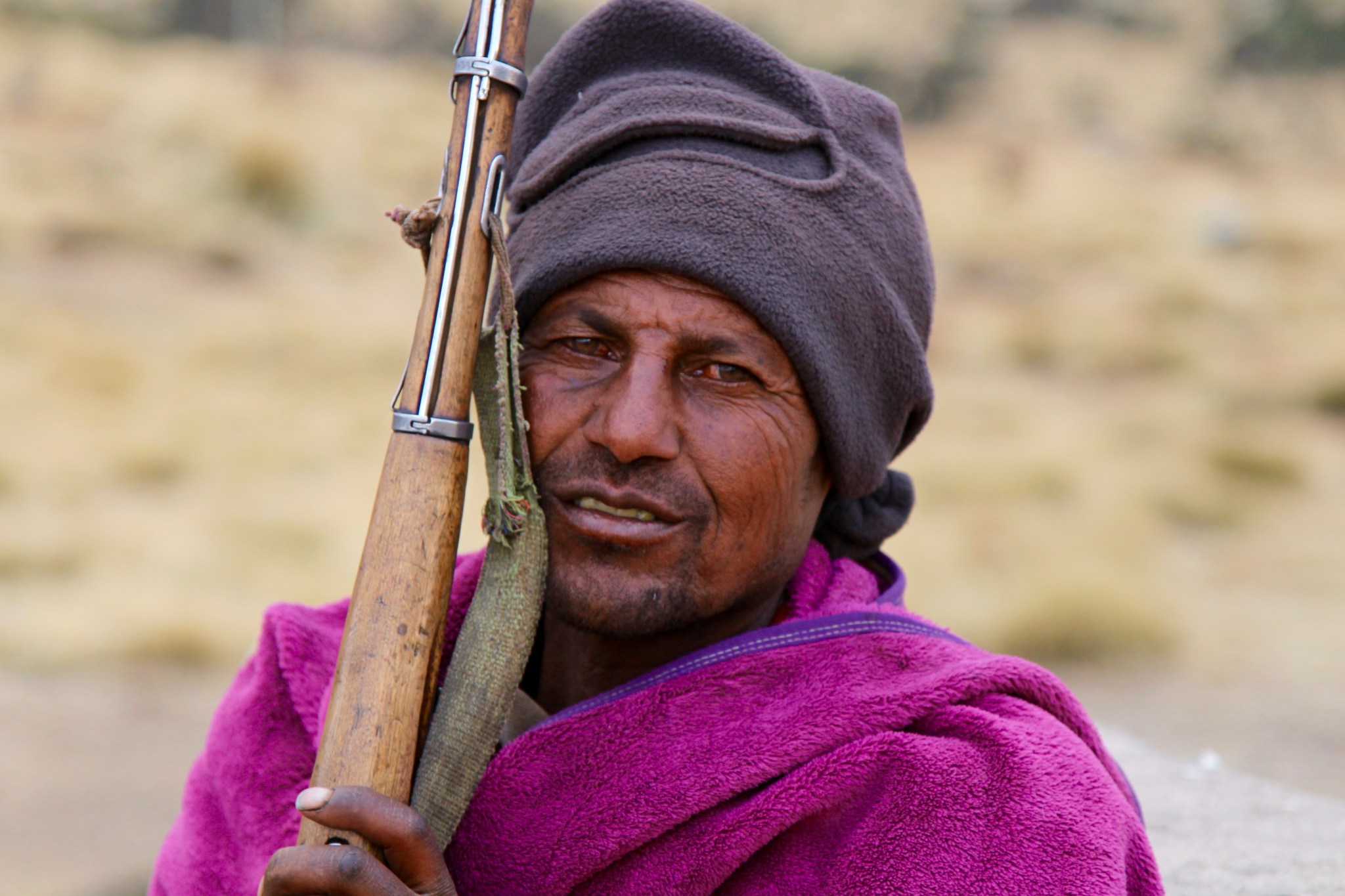
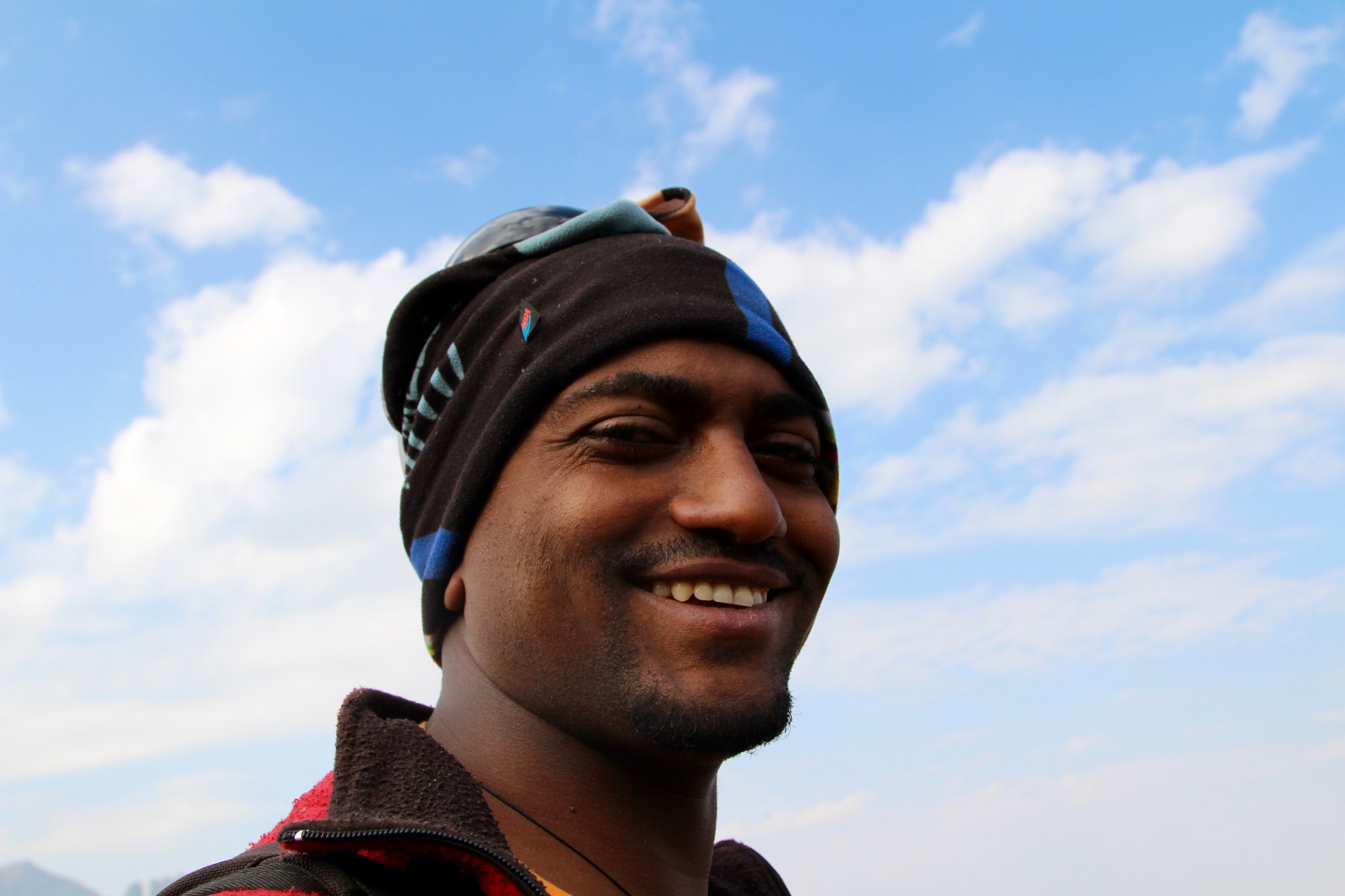
Here are several members of our trekking crew, and the translation of their names. (Deep apologies to Manuela, whom I did not take a proper portrait of).


Chenek
Already at 3,600 meters (over 11,800 feet), the little town of Chenek sits about an hour hike from where Melis dropped us off due to the conditions of the road. It was a fairly easy hike there, but I was immediately surrounded by the children who call the camp home. They got to practice their English; I got to learn some Amharic. Mostly, though, they played with my sunglasses while I honored their request for “and photo!” – one photo! My Flickr page will have many more shots of these cuties, but here’s a few for now:


This was the only campsite where we were joined by several other trekking groups from all around the world. We got to meet many of the guides and scouts from the other groups. Boy do these men know how to take a good photo:


At most other sites, we were joined by a single German couple, one of whom had a constant bloody nose. I’ve never seen anything like it to be honest. But it made for some amusement on the trails since we could always tell if they had been there before us by the dots of blood splattered about. At Chenek, we ate dinner and rested up for our daunting 20-km push to Buwahit (4,430 meters) and Sona the next day.
Day 2: Buwahit (pronounced “bw-ay-eet”)
On our approach to Buwahit , I was really struggling. All of the angst and worry that had bubbled under the surface in the weeks preceding my trip pushed forward through several panic attacks the night prior. In my tent, underneath the most brilliant tapestry of night sky, I tried to distract myself. But it was as if the universe was forcing me to confront it — every piece of electronics I had on me suddenly didn’t work. Both phones. My iPod. I found some scrap paper and scribbled a few things down, but it didn’t work.
My entire body was shaking as my mind raced, un-anchored in doubt: What the hell was I doing in Ethiopia? Shouldn’t I be spending my sabbatical on a beach somewhere? Something terrible is going to happen, I just know it. Why did I come to the Simiens without Amin? I don’t know these people, this will be torture!

I hadn’t had a night like that in a long, long time.
Needless to say, at the outset of the most challenging day of our hike, I was a wreck. I felt deeply alone. My body was full of stress hormones and my muscles weak. Every step felt impossible and I was incredibly frustrated.
After several meters of ascent, Inken, Manuela and Melaku had pushed far beyond me. Abati stuck behind, as was his job, but I just wanted to be alone. I could feel in my chest a welling of tears that, when combined with the altitude, made it hard to breathe. I crouched down and began to cry. Realizing what was happening, Abati extended the most warm and paternal gestures my way and tried to communicate something, but I didn’t know any Amharic and he didn’t speak any English.
Eventually I waddled my way up to meet the others. I confided in Inken, a psychologist, that I was struggling. Immediately, she understood and started to cry with me. The healing power of simply putting words to your feelings will never cease to amaze me.
When Melaku asked what was wrong, she said that I was worried, in a country I didn’t know, all by myself. “Remember when you came to visit in Germany, Melaku, how worried you were?”
And then she turned to me and said, pointing to the others, “But look: you have a mother, a father, and an angel. What more do you need?”
Melaku, the angel, was still sizing me up. He’d trekked these mountains so many times, with so many different faces. “Was this one going to make it?” I imagined him wondering with his dark eyes and curious gaze. In his low, melodic voice he looked at me and said, “No woman, no cry.”
I smiled. I cried a little more and could feel something was shifting. I got up, and at last felt like myself. My breath was easy, my muscles more engaged. That gentle lift in the spirit I was accustomed to feeling during a hard hike had returned. Inken was right. What more did I need?
It turned out that each of us had our own day of struggle on the trail, be it emotional, physical, or gastronomic :). But we held each other through it, checking in on each other and pacing ourselves as a group so that no one was left behind. That’s a good hike, I suppose. The mountain reveals all and forces you to metabolize what you’re going through, one step at a time. It’s incredibly meditative, but rarely without struggle.
Melaku, in jest, was sure to ask us when we’d be crying each day of our trek.
It suits you
The song for this post simply has to be Zero 7’s Likufanele, who’s Zulu chorus literally translates to “the name that they call you by suits you.”
We get up in the morning, feelin’ tired.
Sometimes we feel good, sometimes we feel bad,
But we gonna do it with feelin’.
From the root to the fruit, that’s where everything starts.
 Discover Your Yoga